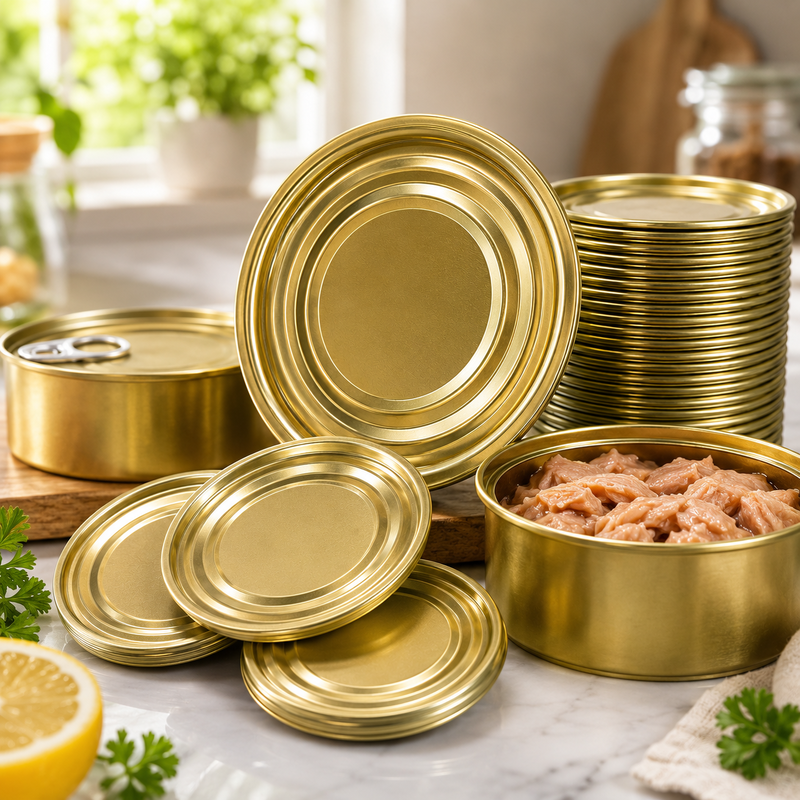
Ürün Tanıtımı:
Modern perakende ambalajı, güçlü görsel çekiciliği ve güvenilir mekanik performans arasındaki dengeyi gerektirir.Litografik baskı kapaklarımız, yüksek kaliteli teneke bobin altyapılarını canlı bir şekilde dönüştüren gelişmiş işleme yöntemleri kullanılarak üretilir.Özellikle güvenilir bir gıda konserve malzemesi olarak tasarlanan bu basılı kapaqlar ve alt uçlar otomatik konserve hatları için hava geçirmez bir mühür sağlar.Korumalı bir çelik taban üzerinde çok renkli CMYK ofset baskı teknolojisi kullanılarak, bu bileşenler markaların plastik etiketlere gerek kalmadan doğrudan metal yüzeyinde ayrıntılı grafikler ve logolar sunmalarını sağlar.
Görünüşlerinin ötesinde, bu metal kapaklar ticari gıda işleminin zorlu koşullarına dayanacak şekilde inşa edilmiştir.Altta yatan çelik substrat, hassas bir elektrolitik teneke katmanı veya organik tenekesiz çelik kaplama ile tedavi edilir.Bu, atmosferik nem, iç gıda asitleri ve dış el kullanımı aşınmasına dirençli güçlü bir bariyer oluşturur.sebze kutuları, kuru toz kutuları veya kolayca açılabilen bileşenler, bu dekore kapaklar dış oksijeni dışarıda tutar ve pas önler, küresel tedarik zincirleri boyunca ürün tazeliğini korur.
Malzeme özellikleri ve derin özelleştirme:
Her ürün hattının farklı raf ömrü, işleme koşulları ve marka düzenleri vardır.Altta yatan metalin mekanik temperatöründen son yüzey grafiklerine kadar uzanan tam özelleştirme hizmetleri sunuyoruzMüşteriler, belirli gıda ürünlerine ve konserve hattı kurulumlarına göre tam malzeme boyutlarını, çekirdek sertliği temperatlarını ve iç lak kimyasallarını belirleyebilirler.
Üretim tesisimiz otomatik yüksek hızlı kaplama ve çok renkli baskı hatlarıyla donatılmıştır.ve koruyucu dış laklar doğrudan ana teneke bobinden işlenmiş metal levhalaraKapamanın içi için, organosol, epoksi-fenol reçine gibi özel kaplama seçenekleri sunuyoruz.veya kükürte dayanıklı alüminyum pastası asidik veya protein bakımından zengin gıdalarla kimyasal reaksiyonların önlenmesi içinAlıcılar ayrıca cesur raf varlığı için yüksek parlaklıklı finişler veya yüksek hızlı işleme ve nakliye sırasında çizilmeye karşı dirençli dokulu mat laklar arasında seçim yapabilirler.
Teknik Özellikler Matrisi:
| Teknik parametreler |
Spesifikasyon aralığı ve endüstri standartları |
| Malzeme Temel Formu |
Elektrolitik Teneke (SPTE) / Tenekesiz Çelik (TFS) |
| Birincil Temel Substrat |
Sıcak olarak yuvarlanmış düşük karbonlu taban plaka |
| Malzeme Kalınlığı |
0.15 mm ️ 0.35 mm |
| Bileşen çapları |
50 mm 153 mm |
| İç koruyucu laklar |
Altın Lak, Açık Organosol, Alüminyum Pastalı Kaplama |
| Dış bitirme stilleri |
Parlak Laç, Mat Laç, Basit, Basılı |
| Mekanik ısıtma sınıfı |
T1, T2, T3, T4, T5, DR8, DR9 |
| Kalite parametreleri |
ISO 11950, JIS G3303, ASTM A623 ile uyumluluk |
Global markalar neden bizimle ortak oluyor:
Uluslararası gıda işleyicileri ve ambalaj üreticileri basılı kapaklarımızı seçerler çünkü güvenilir partiden partiye tutarlılık, doğru renk eşleşmesi,ve güvenilir mekanik performansÇiğ teneke bobinden son basılı ve damgalanmış bileşene kadar üretim sürecini kontrol ederek, metalin eşit kalınlığı ve kenar düzlüğünü korumasını sağlıyoruz.Bu hassasiyet, besleme sıkışıklıklarını önler ve yüksek hızlı otomatik dikiş ve krimpleme ekipmanlarında alet aşınmasını azaltır.
Gelişmiş korozyon direnci ve sıkı kalite kontrolüne odaklanmamız üretim israfını en aza indirmeye yardımcı oluyor.Renk spektrophotometresini ve otomatik optik tarayıcıları kullanarak her seriye renk doğruluğunu ve laktırma kaplamasının tutarlılığını kontrol ediyoruz.İç koruyucu kaplamalarımız yüksek sıcaklıkta pişirildiğinde soyulmaması veya kabarmamasını sağlamak için hassas sıcaklık kontrolü altında sertleştirilir.Paketleme işlemleri hızlı üretim hızlarını koruyabilir, hurda oranlarını azaltmak ve küresel perakende ağlarında toplam ürün güvenliğini sağlamak.
Sıkça Sorulan Sorular (FAQ):
S1: Basılı mürekkepler ve laklar yüksek sıcaklıklı retort işleme sırasında nasıl sağlam kalır?
A1: Özel, termal olarak kalınlaştırılmış baskı mürekkepleri ve gıda güvenliği için uygun dış laklar kullanıyoruz.Bu, standart ticari buhar sterilizasyon süreçleri sırasında baskı berraklığını ve kaplama yapısını koruyan çapraz bağlantılı bir yapı oluşturur (121 °C'yi aşan).
S2: Baskı kapakları için elektrolitik teneke plaka ile karşılaştırıldığında teneke olmayan çelik kullanmanın ana avantajları nelerdir?
A2: Silikasız çelik, mükemmel bir lak ve mürekkep yapışkanlığı sağlayan bir krom/krom oksit kaplama katmanına sahiptir..Atmosferik pas ve organik asitlere karşı güçlü bir direnç sunar ve tüm yüzey kaplamasına maruz kalan bileşenler için uygun maliyetli bir alternatif sunar.
S3: Yüksek kükürt veya yüksek asitli gıda ürünlerini işlemek için farklı iç kaplamalar isteyebilir miyiz?
A3: Evet, kesinlikle. İç lakı belirli ürün kimyasına göre ayarlıyoruz. Sitrus meyveleri veya domates gibi asidik gıdalar için kalın, çok katmanlı altın veya açık kaplamalar uyguluyoruz.Yüksek proteinli içinSülfürün siyahlaşmasını önlemek ve konteynerin içini temiz tutmak için özel alüminyum pasta kaplamaları kullanıyoruz.
S4: Taşıma sırasında yüzey çiziklerini önlemek için bu litografik basılı kapaklar nasıl paketlenir?
A4: Özel grafikleri korumak için, bitmiş kapaklar sıkı sıralara yerleştirilir ve tozsuz koruyucu kollara yerleştirilir.Güçlendirilmiş fumize edilmiş ahşap paletler üzerinde yığılmış, ve nakliye pas ve sürtünme hasarını önlemek için tamamen nem geçirmez buhar korozyon inhibitörü (VCI) küçülme filmine sarılmıştır.


 Mesajınız 20-3.000 karakter arasında olmalıdır!